Japanese Red Cross Kyushu International College of Nursing
University Students' Project for Solving Urban Issues: Report on Disaster Prevention and Mitigation Activities in Chijima
Introduction.
The Japanese Red Cross Kyushu International College of Nursing is one of the universities established by the Japanese Red Cross Gakuen Educational Corporation throughout Japan, and opened in Munakata City, Fukuoka Prefecture in 2001 as a center of nursing education in the Kyushu region. The university places importance on cooperation with the local community and actively promotes contributions to the local community through nursing education. As part of this effort, the university has been focusing on activities to solve local issues in cooperation with Munakata City.
The Project for Solving Urban Issues with the Power of University Students (hereafter referred to as "Machi-Pro") is a collaborative project initiated in 2021 by Munakata City, the location of our university, with the aim of linking the flexible ideas and research results of university students to solving regional issues and improving the attractiveness of the region. This paper provides an overview of these activities.
Ji-no-shima, where the students are based for this activity, is a remote island with an area of 1.57 km2 located 2.0 km northwest of Kanezaki, Munakata City, Fukuoka Prefecture. The island has a thriving rock fishing and angling industry for seaweed, sea urchins, and abalone, and in spring, approximately 6,000 camellia trees bloom beautifully. There are two villages on the island, Tomari and Toyooka, which can be reached from the Shinminato Port ferry terminal to Tomari Port in about 15 minutes and to Shirahama Port in about 25 minutes. As of July 2022, the population was 137, and the aging rate was 48.9%. Due to its geographical characteristics, the risk of isolation in the event of a disaster is high, and in addition, the aging of the population is increasing the need for local residents to take the initiative in disaster prevention and mitigation. Against this backdrop, the Japanese Red Cross Kyushu International College of Nursing has launched a disaster prevention/mitigation activity by students to enhance the self-help capabilities of local residents by utilizing the knowledge and experience they have accumulated so far.
1.4 Introduction of activities over the past four years
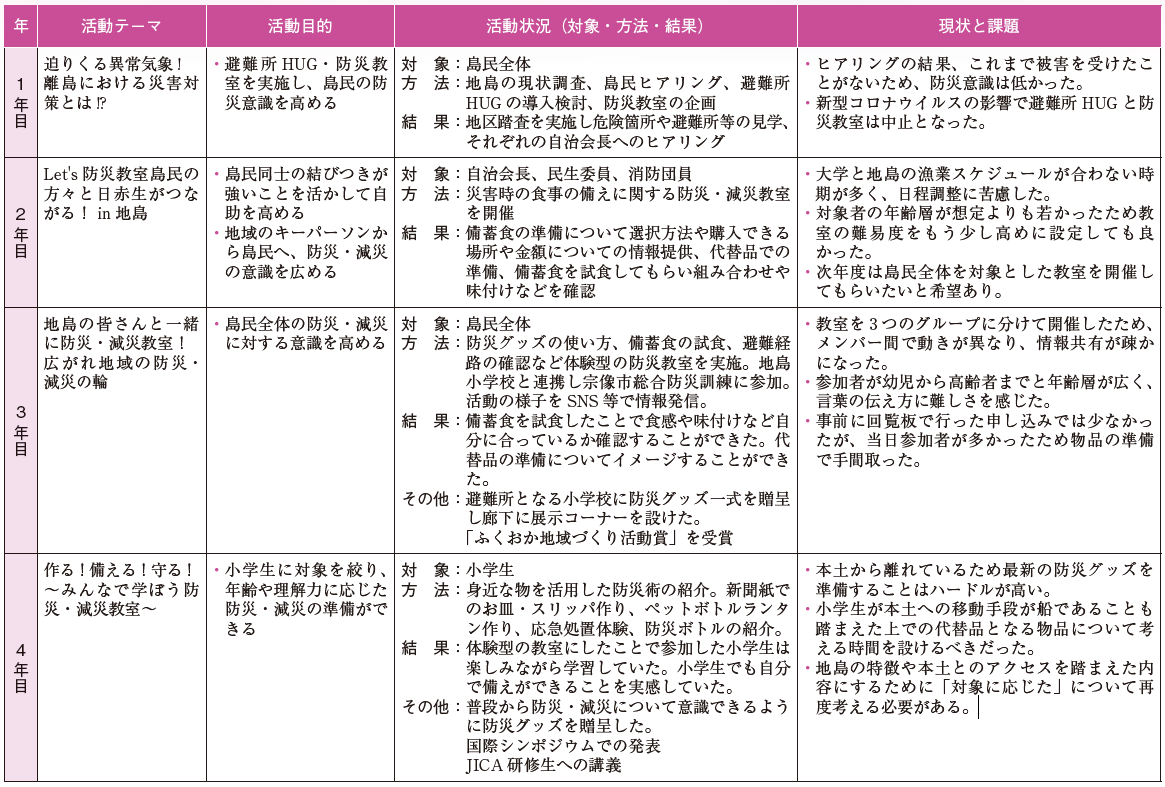
Looking back on our activities over the past four years
Through their activities over the past four years, the students have contributed to raising disaster awareness among local residents and have also grown significantly on their own. The students faced many challenges, such as the restrictions on activities due to the Corona Disaster, the geographical location of the islands, and the difficulty of coordinating schedules, but they overcame these challenges one by one through membership and leadership. The project now has more than 20 students, and its activities have been recognized by the local community (the Fukuoka Community Development Activity Award).
The most significant results obtained through the activities were that the students developed trusting relationships with local residents and improved their communication and presentation skills. Students who were initially nervous about making telephone inquiries gradually became able to speak in their own words. They also developed a community-based perspective and realized the importance of understanding the living environment of patients during hospital training, thus laying the foundation for taking charge of comprehensive community care as nurses. In particular, the system in which upperclassmen mentor lowerclassmen has provided good learning opportunities for the lowerclassmen, and has also led to the growth of the upperclassmen. The learning through this activity is similar to that of the "Preventive Home Visiting Practicum for Elderly People by Nursing Students "1) at Oita University of Nursing Science and Technology, suggesting the importance of continuous visits, collaboration with the community, and intergenerational exchange.
The hands-on disaster prevention and mitigation classes that have been conducted so far have allowed participating islanders to learn while having fun, and have raised disaster awareness throughout the community through participation in disaster drills and information dissemination. One student, for example, said that he was glad to hear from the islanders in the class that they were thinking seriously for their own sake, and that this made him realize anew the significance of the activity. The presentation of disaster prevention goods to the elementary school, which serves as an evacuation center, and the setting up of a display corner may have also served as a catalyst for raising local residents' interest in disaster prevention.
The experience gained through these activities has been a valuable asset not only to the students' growth and contribution to the community, but also to the university. Some students became interested in prevention activities and decided to enroll in the public health nursing program, while others chose community disaster prevention as the theme of their graduation research. Some students have decided to enroll in the program because of the appeal of these activities, and the circle of activities is expanding even further.
Of course, the activities were not always smooth sailing. In conducting the activities, we had to be creative in the way we conveyed our message to the wide age range of participants, and we also faced some challenges in terms of management. We will continue to make improvements in order to overcome these challenges and aim for higher quality activities.
3. future prospects
In the future, we intend to utilize the experience we have gained over the past four years to further develop our activities close to the people of Jishima. Specifically, we will develop our activities in the following three directions
First, while continuing our existing activities, we aim to develop new disaster prevention and mitigation programs tailored to the needs of the people of the Jishima. For example, in light of the current lack of preparedness, we will focus on the issue of toilets, which are always needed in times of disaster, and how to prepare and use portable toilets,
We are considering holding workshops to learn about hygiene management and other topics. We will continue to work with the islanders to determine the location of restrooms.
Second, we will support islanders to voluntarily think about disasters even when classes are not being held. For example, we will discuss with islanders how to contact each other in the event of a disaster and how to set up and operate an evacuation center in the absence of elementary school teachers and staff.
We are considering doing so.
Third, we will increase opportunities for students to work independently in the community and develop leadership and problem-solving skills. In addition, we will continue to provide opportunities for students to present their work on a global stage, such as at international symposiums and lectures to JICA trainees, in order to broaden their perspectives and lead to learning beyond the region. These activities will not only broaden the students' perspectives, but will also provide them with opportunities to communicate their activities on Jijima to the rest of the world, and can be expected to play an important role in spreading the word about regional disaster reduction efforts in Japan.
Through these activities, students, faculty, and staff will work together to further expand the circle of disaster prevention and disaster mitigation on Jishima and contribute to the creation of a safe and secure community.
1) Preventive Home Visiting Practice for Elderly People by Nursing Students: A Journal of Public Health Nurses
Vol. 75, No. 3, P238-244, Takayuki Kageyama, Fumiko Ogata, Aya Shinohara, Sachiyo Murashima
-
Making slippers with newspaper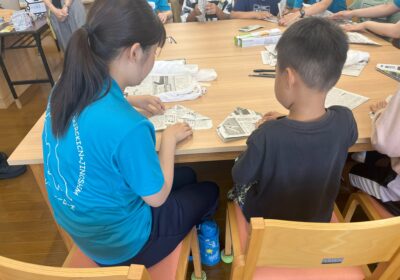
-
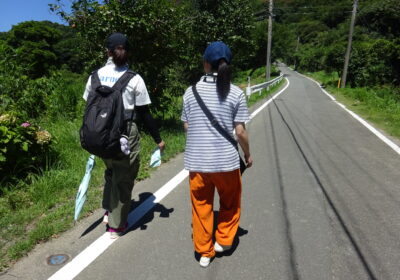
Searching for Dangerous Locations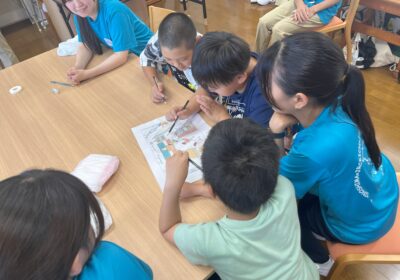
-
Lecture for JICA trainees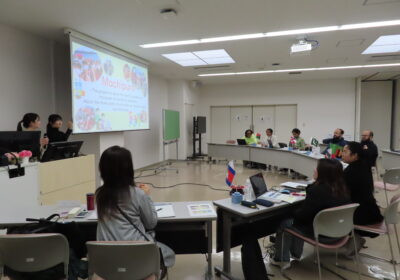
-
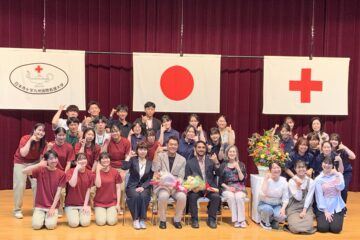
Received the "Fukuoka Regional Development Activity Award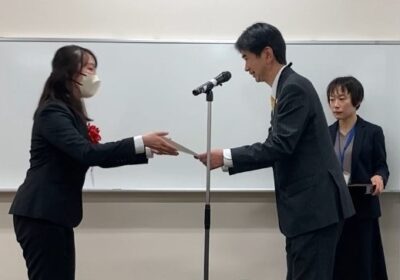
-
PET-bottle lantern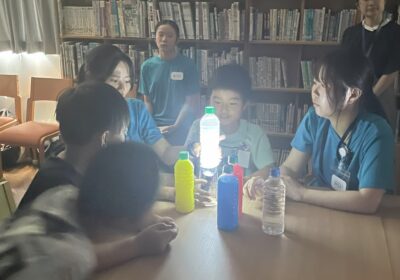
-
sleeping pad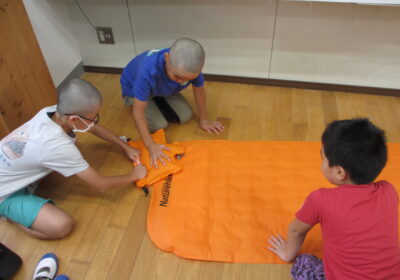
-
regional medical examination