Fukuoka Jogakuin College of Nursing School of Nursing
The University has placed simulation education at the core of its efforts to improve the quality of nursing education and strengthen practical skills. 2016 saw the establishment of the Simulation Education Center, followed in 2017 by the opening of the Multilingual Medical Support Course, which deals with medical communication and cross-cultural understanding in English, and in 2020 In 2020, we will begin administering the Objective Clinical Competency Examination (OSCE), and have been developing a practical learning environment and evaluation methods. Through these efforts, the University is striving to develop nursing professionals who can meet the demands of the times through both nursing simulation education and cross-cultural understanding education.
Against this backdrop, in FY2024, the University received a grant from the Japan Association of Private Nursing Colleges and Universities to conduct international exchange activities with Hong Kong Metropolitan University (HKMU), which excels in simulation education. The purpose of this project was to allow students and faculty members to learn nursing from each other in a cross-cultural environment while being exposed to cutting-edge educational technology.
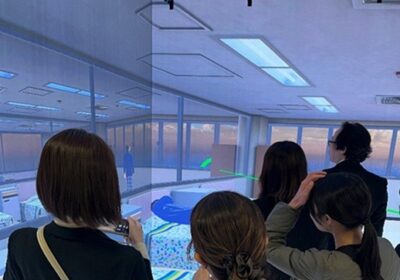
In March 2025, HKMU faculty and graduate students visited HKMU to exchange information on nursing education and healthcare systems at both universities. They also visited a simulation facility utilizing VR and AR, an educational unit incorporating Oriental medicine, and a cranial nerve science laboratory to experience firsthand the latest initiatives in nursing education. They also visited the Multidisciplinary Simulation Center (MDSSC) at the Queen Elizabeth Hospital in Hong Kong, where they were able to learn about advanced examples of the use of simulation in in-service education and technology development.
At the same time, 11 HKMU students participated in the HKMU short-term study abroad program. Through facility tours, simulation experiences, and discussions with local students, the students learned about cross-cultural nursing perspectives. They also had an opportunity to give a presentation in English on Japanese nursing and healthcare systems, which helped them reflect on their own learning and motivated them to improve their language skills.
Through this project, students were able to broaden their international perspectives, and faculty members gained new insights into educational methods and research collaboration possibilities. In particular, it was a great achievement to obtain many suggestions for the development of curricula that incorporate simulation education and VR technology.
In the future, we plan to further develop interactive activities, including the exchange of HKMU students and faculty members coming to Japan scheduled for the fall of 2025. HKMU will also promote international joint research and sharing of educational methods to further strengthen international collaboration in nursing education.
We would like to express our sincere gratitude to the Japan Association of Private Nursing Schools for providing us with this valuable opportunity.
-
At HKMU (meeting)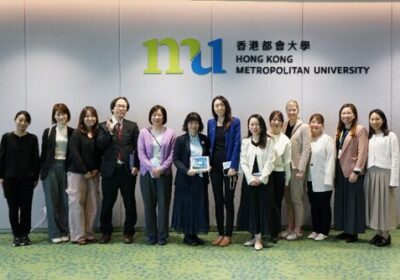
-
At MDSSC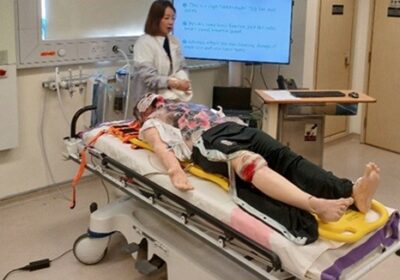
-
AR/VR Experience